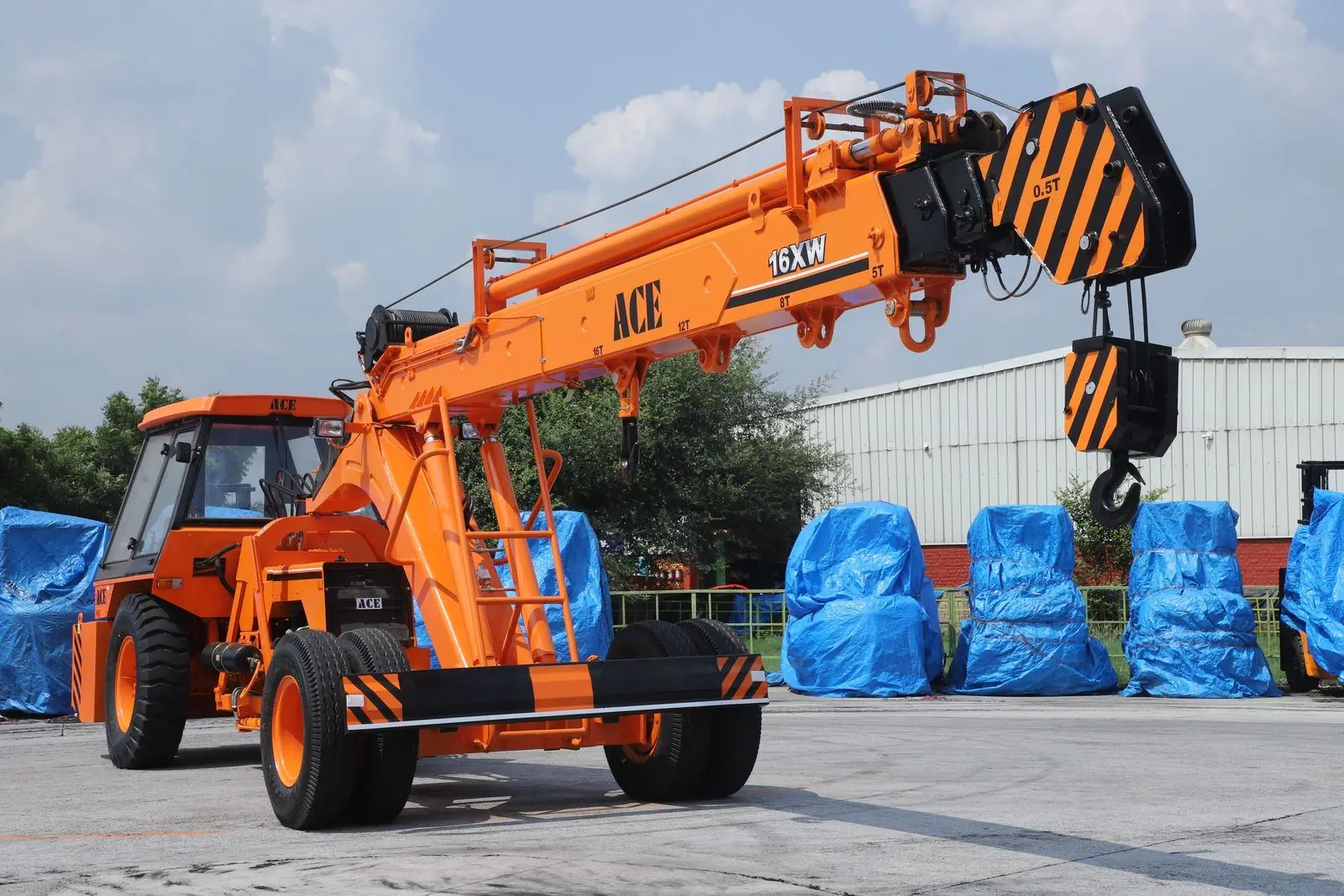
On most Indian sites, "get a crane" means a Hydra. These pick-and-carry cranes are everywhere because they suit the way our sites work: they drive in on their own wheels, lift a load, carry it a short distance and set it down, often without the setting-up time a larger crane needs.
That convenience is also why Hydras get asked to do jobs they were not built for. Choosing the right lift starts with being honest about the job.
Where a Hydra crane is the right choice
- Shifting loads around site. Moving steel sections, pipes, precast pieces or small machinery from where the truck dropped them to where they are needed.
- Loading and unloading. Taking heavy pieces off trailers and placing them on the ground, or the other way round.
- Short, low lifts. Placing items close to the crane and not far above ground level.
- Tight sites with frequent moves. When the crane needs to reposition many times in a day.
Where you need something else
A crane's capacity is not a single number. The rated capacity printed on the machine applies only in the most favourable position, with the boom close in. As the boom extends further or the load moves away from the crane, the safe working load drops.
So a 15 MT Hydra does not lift 15 tonnes everywhere. If your job involves heavy pieces placed far from where the crane can stand, or lifts to height on a building, ask about a larger mobile crane. The crane operator's load chart is the final word, and a good operator will refuse a lift the chart does not allow.
What to tell the crane company
Before anyone sends a machine, have answers to these:
- The heaviest single piece to be lifted, with its dimensions.
- How high and how far it has to go from where the crane can stand.
- Ground conditions. Fresh fill, soft soil and slopes all change what is safe.
- Access. Gate width, overhead wires, and the route the crane will drive in on.
- Duration. A few hours, a day, or a few weeks of regular shifting.
With these, the right machine arrives the first time.
Safety is the job
Every lift needs a trained operator, a person guiding the load from the ground, and slings and shackles in good condition. Keep people out from under suspended loads. Travelling with a load raised high, or across sloping ground, is where most pick-and-carry accidents begin.
Plan the lift before the crane arrives, not after.
We run Hydra 15 MT cranes for steel lifting, machinery shifting and loading work. If you are not sure which crane your job needs, send us the details and we will tell you straight.