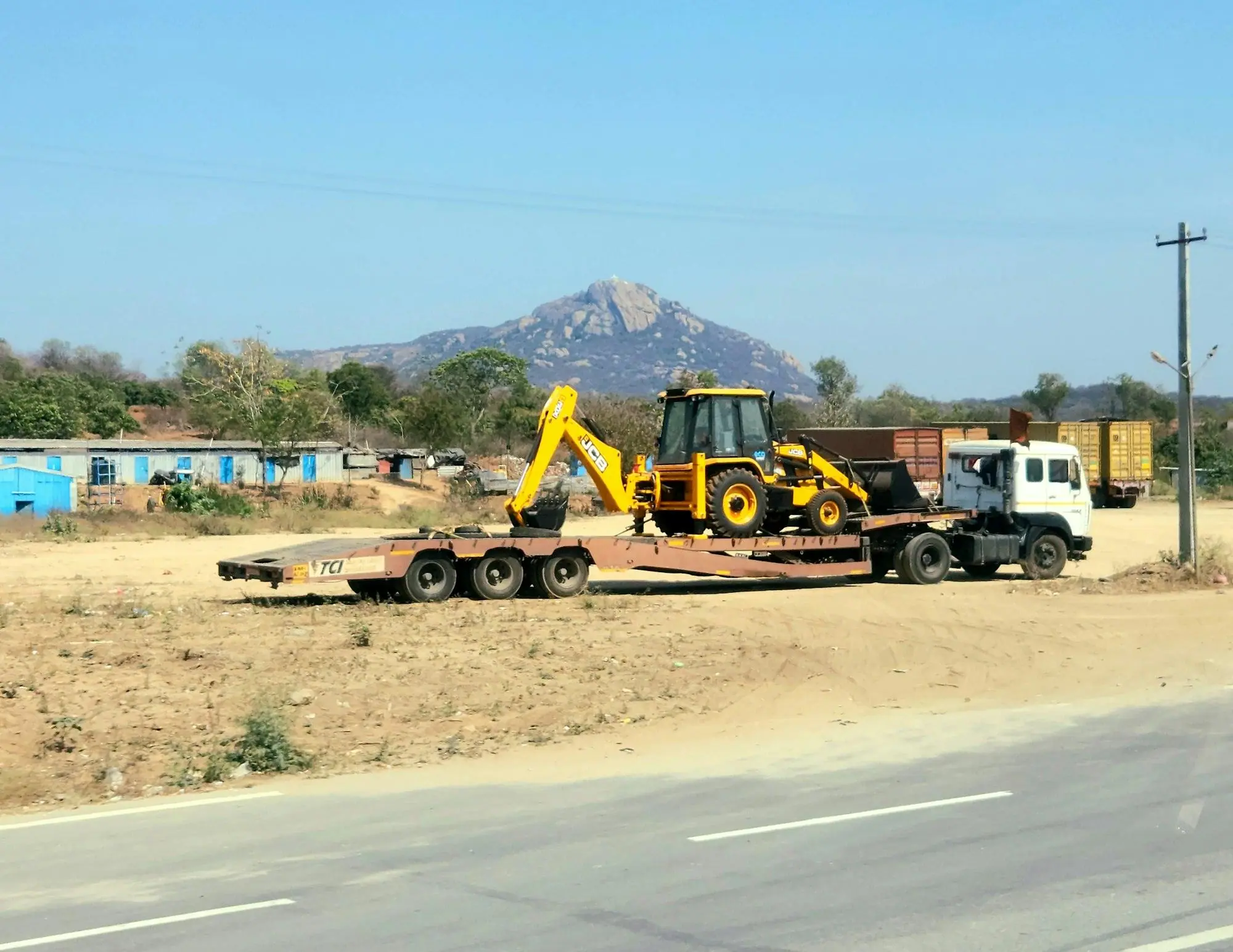
Tracked excavators and most plant equipment cannot drive on public roads, so every move between sites is a small project of its own. Getting it right is mostly about knowing the numbers before the trailer arrives.
Know the real weight
Use the machine's operating weight, including any attachment that travels with it, such as a breaker or a large bucket. The trailer and the truck pulling it must both be rated for that load with a margin to spare.
Match the trailer to the load
Check three things: capacity, deck length, and height. A machine that fits the weight limit can still be too long for the deck, or too tall once it is loaded, for bridges and wires on the route.
Survey the route
Drive the route before the move, or ask someone who knows it. Look for low bridges, overhead cables, narrow turns, weak culverts, toll gates and town centres with timing restrictions. Plan the move for the hours when the road is quietest.
Check what permissions apply
Oversize and overweight loads may need permission from the road authorities on the route. Find out what applies to your load before booking the move.
Load on firm, level ground
Loading needs a flat, firm area with room for the trailer to stand straight. Ramps must be set at the right angle and checked before the machine climbs. An experienced operator drives the machine on slowly, centred on the deck.
Secure the machine
Once on the deck, lower the boom and bucket, lock the controls and chain the machine down at its designated tie-down points. Check the chains again after the first few kilometres.
Unloading is half the job
Make sure the receiving site has the same level ground and space as the loading site. A move is finished only when the machine is off the trailer and ready to work.
Measure twice, load once.
Our 50 MT platform moves excavators, loaders and plant machinery between sites. Send us the machine and the two locations and we will plan the move.