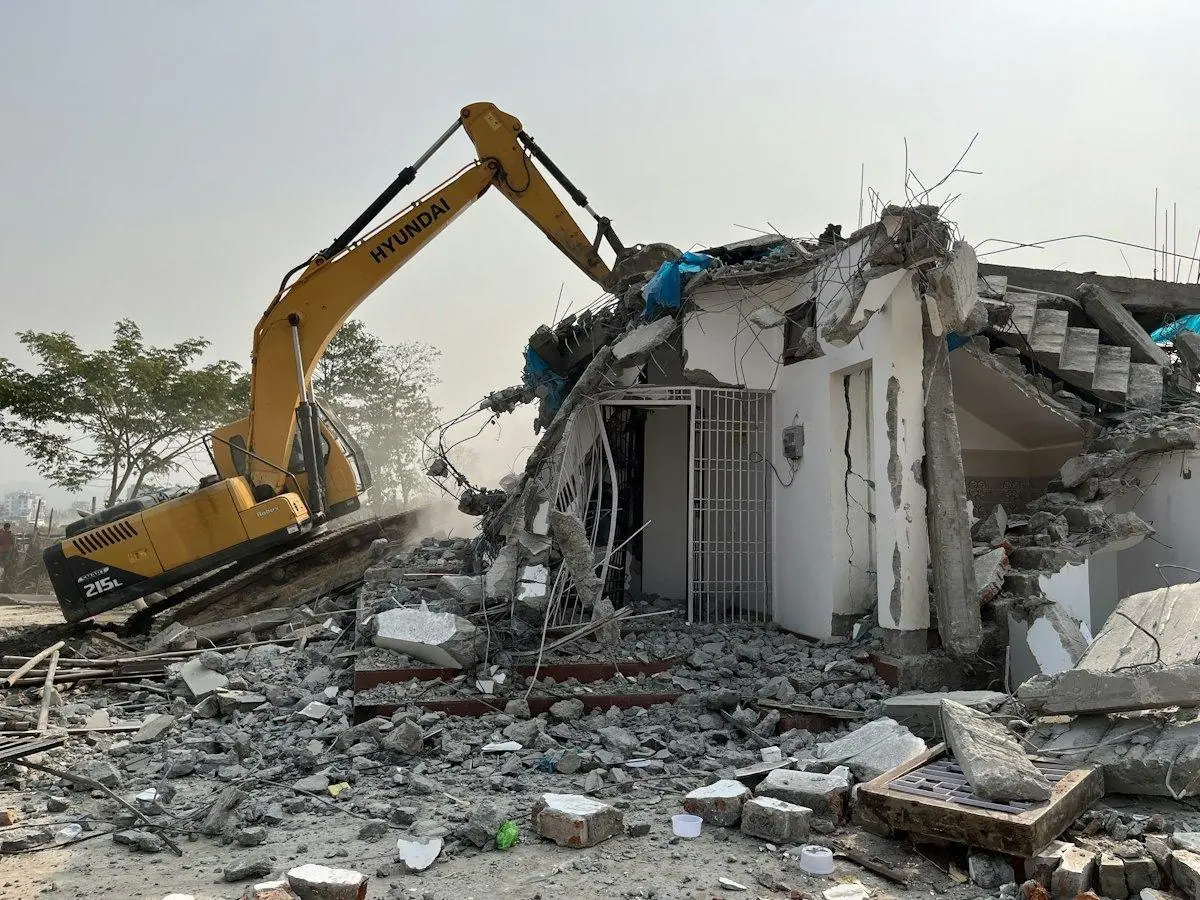
Bringing down an old building in an open field is straightforward. Doing it on a busy street, between occupied buildings, takes planning. The machine work is often the quickest part.
Start with permissions
Check what your local authority requires before demolition, and whether the structure falls under any special rules. Keep copies of approvals on site. Work that stops halfway because a permission is missing costs more than waiting a week at the start.
Disconnect every service
Electricity, water, gas and telephone connections must be cut and confirmed dead by the people who supply them. Do not rely on a switch being off.
Survey the structure
Walk through the building before work begins. Note how it is built, where the load-bearing walls and columns are, and anything that needs to come out first, such as glass, wood, metal fittings and any hazardous material. Removing these early keeps the debris cleaner and easier to dispose of.
Plan the sequence
Buildings come down from the top, in a planned order, so that nothing falls the wrong way. On tight plots, the side next to a neighbouring building is usually taken down carefully and by hand where needed, before the machine works on the rest.
Control the dust
Keep water spraying on the work face while the machine breaks the structure. Cover debris piles and tipper loads. Neighbours notice dust before they notice anything else.
Separate the debris
Keep concrete, brick, steel and wood in separate piles as they come down. Steel can be sold for scrap, clean rubble can sometimes be reused as fill, and separated debris is easier to cart away.
Talk to the neighbours
Tell the people next door when work starts, what hours it will run and who to call with a problem. It costs nothing and prevents most complaints.
The best demolition is the one the street hardly notices.
We handle demolition and site clearing with our own excavators and loaders. Tell us about the structure and we will plan the work with you.